Tuesday, 12 July 2011

Open and closed loop.

OPEN LOOP:


This is when engine is cold, ECU through its input sensors IAC, TPS, ECT, RPM help then determines the delivery of fuel so when cold, O2 sensor is not at operating point so it signal "feedback" is ignored by the  ECU. This shows that ECU is controlling fuel delivery operation. 


                               OPEN LOOP = NOT USING FEEDBACK FROM O2 SENSOR.


CLOSED LOOP: 


This is when engine is warm and to the O2 sensor, its signal to the ECU becomes usable for it to read so that now, the ECU uses the rich/lean signal from the O2 sensor to determine and deliver the best air/fuel mixture possible (Ideal is 14.7). This shows that the ECU is now using the"feedback" from the O2 sensor.


                               CLOSED LOOP = USING FEEDBACK FROM O2 SENSOR.

Monday, 11 July 2011

Glow plugs on a diesel

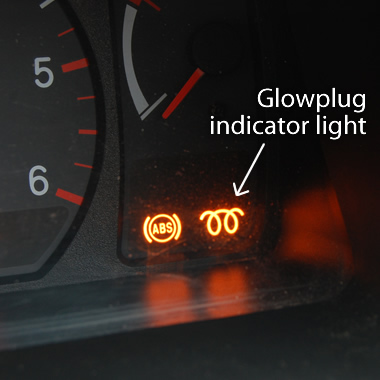
In a diesels, unlike a petrol engine need two important factors for it to run which are heat and compression. A petrol needs spark when piston is on on the compression stroke because if there were no spark the piston wouldn't have any pressure to be pushed down therefore no power stroke wouldn't be archived and vehicle wouldn't move. Diesels need heat for cold starts to warm the cylinder so that the air that enters the cylinder is warmed and when piston compresses the now hot air the fuel will be injected straight into the hot compressed air and ignite spontaneously which then gives you the power stroke. With diesels you cant just get in and crank it over like a petrol engine simply for the fact its air needs to be hot when compressed. A light on the dashboard of the vehicle will light like pictured. If you start cranking before light goes out, engine might not start when dead cold because the light indicates that the glow plugs are doing there job which is to heat the air in the cylinders. When light flicks off, the cylinder is now at a good operating heat so when cranking the engine will then start.

TESTING GLOW PLUGS FOR AMPS AND VOLTAGE:


VOLTAGE OF GLOW PLUGS:
Glow plugs is vital for diesels for cold starts. When voltmeter is connected in paralel to the glow plugs and key is on, light on the dash should light up for about 8-15 seconds (different for every models). As it lights the voltage reading should be around 10v for that time the light in dash lights up and then drop back down. This shows that the glow plugs are getting its voltage which in turn can heat up the air for compression which the diesel is now able to crank over and start easily. When glow plug is tested to see if working right, it needs to be connected in paraelel and then the tip of the glow plug will heat up towards the middle and indicates its working fine. If it heats up any other way then its faulty. When one glow plug goes the rest are sure to follow so it recommended that you replace the lot when one fails. Not cheap.$$$

RESISTANCE OF GLOW PLUGS:


Checking resistance of a glow plug is pointless.Glow plugs that are faulty can still give you a resistance reading which can cause more work than needed. So resistance and continuity was not used at all because it can give false reading.

AMPS OF GLOW PLUGS:


When checking amps of each glow plug, it should be 10amps and buzz bar should be 40amps also ampsmeter should be connected in series. When ampmeter is connected to the buzz in series, just like before with the voltmeter, as key is turned on the light in the dash will light and the reading on ampsmeter will be 40amps and fall slowly until light in the dash turns off and meter will again read 0amps

Voltage and amps are important for glow plugs and not resistance or continuity.

MAP sensor.

http://www.enginebasics.com
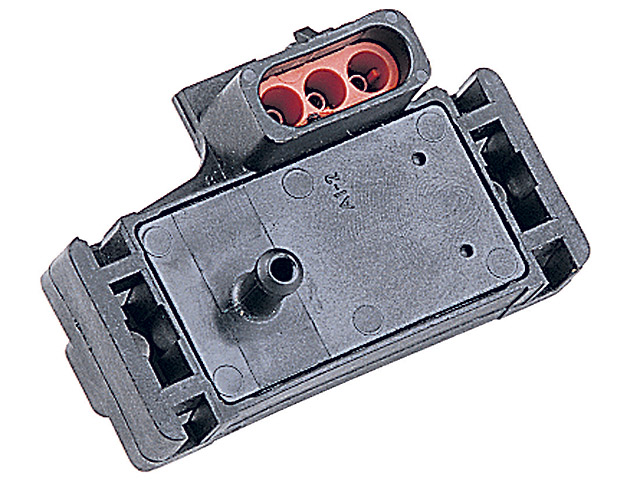
This is used used by the ECU to measures differences between  atmospheric pressure, intake manifold pressure and also low pressure (vacuum). Pressure within the intake manifold changes with position of throttle. At WOT (wide open throttle )manifold and atmospheric pressure is about same which give out a high voltage reading. When KOEON(key on engine on) the pressure inside the manifold lowers creating vacuum ( a low volt reading). Oxygen content and air pressure also changes with altitude ( high altitude low pressure low altitude high pressure) which then ECU needs to compensate by making changes to fuel flow either by increasing or decreasing the flow rate entering the engine. This is archived by having a MAP/MAF,BARO and BMAP. The ECU reads the MAP to determine load on the engine and speed which then adjusts the pulse width of the injectors  which alters air/ fuel mix and advances spark timing. It also detect deceleration with the drop of voltage which is seen by ECU and  then fuel will either be stopped or majorly reduced to improve emissions. A change in the resistance causes change in signal voltage of intake manifold pressure.With the vehicle at sea level, if the throttle is open the manifold absolute pressure will increase from 15" Hg to near 30" Hg (mercury~100 kPa), about equal to the local barometer.The higher absolute pressure in the intake manifold increases the air's density, and means more fuel can be burned resulting in higher output.

Oxygen sensor, Catalytic converter and Emission.

OXYGEN SENSOR.

http://upload.wikimedia.org/
This is referred to as lambda usually found on the exhaust manifold before the catalytic converter. This sensor measures the oxygen within the exhaust stream and outside the exhaust stream, this will signal the ECU that there's a high amount of oxygen or a low amount of oxygen. When the voltage or resistance is high, ECU will then will think its a lean mixture meaning lots of the fuel was not burnt at combustion and when its low, ECU will think its rich meaning all of the fuel was used up in the combustion chamber. This sensor only works when at a certain temperature and is why this sensor has 1 - 4 wires. O2 sensors with 3 or more wires usually have a built in heater which helps it get to operating temperature  faster (two wires heater + and -, two are signal + and -. This sensor tells ECU when to richer the air/fuel mix or lessen the air/fuel mix. There are two main types of O2 sensors zirconia and titania sensors. Zirconia outputs a voltage while the other a resistance with the presence of oxygen in the exhaust stream. Both sensors voltage signals is above 450millivolts (mv) indicates rich and below 450millivolts indicates a lean. With a oscilloscope, the wave pattern of a O2 sensor should fluctuate between minimum of 200mv and less and maximum peak voltage should be 800mv and more. peak to peak should be at least 600mv or greater with average of 450mv. When engine starts cold, ECU will operate in open loop meaning its running off pre-recorded information stored by the ECU until it reaches operating temperature which ECU will run close loop meaning its no long running off pre-recorded reading and running straight of the O2 sensor
.
     
CATALYTIC CONVERTER AND EMISSIONS.


http://upload.wikimedia.org
This is found between the exhaust manifold and the muffler in the  exhaust system. It's job is to neutralise and create a chemical reaction so that the pollutants within the gases that come out of the exhaust is not harm to us and the ozone. Location of the CAT is important as it needs to retain as much heat for effective operation. This contains small parts of rhodium, palladium and platinum and together act as a catalysts. As exhaust gases pass through the CAT the catalysis reacts turning the exhaust gases from HC( hydrocarbon)+N2O(nitrous oxide)+CO(carbon monoxide) to H2O(water vapours)+CO2(carbon dioxide)+N(nitrous). If this is achieved then on a emissions reading machine it would read HC ,O2 AND CO would be low and CO2 would be high and this is ideal and shows that CAT was working and doing its job well. If HC,O2 AND CO were high and CO2 was low it could be seen as its running rich and could also indicate that the O2 is fusing with the NO which makes up NOx so it would be HC+CO+NOx+SUNLIGHT = SMOG and is bad not only for us to breathe but also for the ozone.